
The One Exercise More Adults Should Be Doing For Healthy Aging
For decades, the advice was pretty consistent: want to stay healthy as you get older? Get your cardio in. Walk, bike, swim, keep that heart rate up. But research over the last several years has made one thing increasingly clear: cardio alone isn’t enough to age well. And the missing piece for most adults isn’t another walk around the block — it’s strength training.
Why Strength Training Is Having a Moment
The conversation around healthy aging has shifted in the past decade. Doctors and researchers focused on longevity are now talking as much about muscle mass as they are about heart health, because it turns out the two are deeply connected, and muscle loss is a much bigger problem than most people realize.
Starting around age 30, adults begin losing muscle mass at a rate of about 3 to 8 percent per decade. After 60, that rate accelerates. The medical term for it is sarcopenia, and it’s a major driver of the things people fear most about getting older: falls, fractures, loss of mobility, and loss of independence.
Here’s the good news: sarcopenia is largely preventable. And the most effective tool for preventing it is resistance training.
What the Research Actually Shows
Studies consistently link greater muscle mass and strength in older adults to lower rates of chronic disease, better metabolic health, and longer independent living. Grip strength and lower body strength in particular have emerged as reliable predictors of long-term health outcomes — not because squeezing hard is the point, but because they’re proxies for overall muscle health throughout the body.
One frequently cited measure is the sit-to-stand test: how easily can you get up from the floor without using your hands? It sounds deceptively simple, but performance on that test correlates meaningfully with longevity. The underlying strength it requires is exactly what resistance training builds.
The Metabolic Bonus
Muscle tissue isn’t just useful for moving around. It’s metabolically active, meaning it burns calories even at rest. The more muscle mass you have, the better your body regulates blood sugar and responds to insulin, which is key to reducing the risk of type 2 diabetes and managing weight as you age.
This is part of why strength training has moved so prominently into the longevity conversation. It’s not just about being strong; it’s about keeping your metabolism, your hormones, and your cardiovascular system working the way they should.
You Don’t Have to Go to the Gym
The most common barrier people cite is access — a gym membership, equipment, knowing what to do. The good news is that effective resistance training doesn’t require any of it.
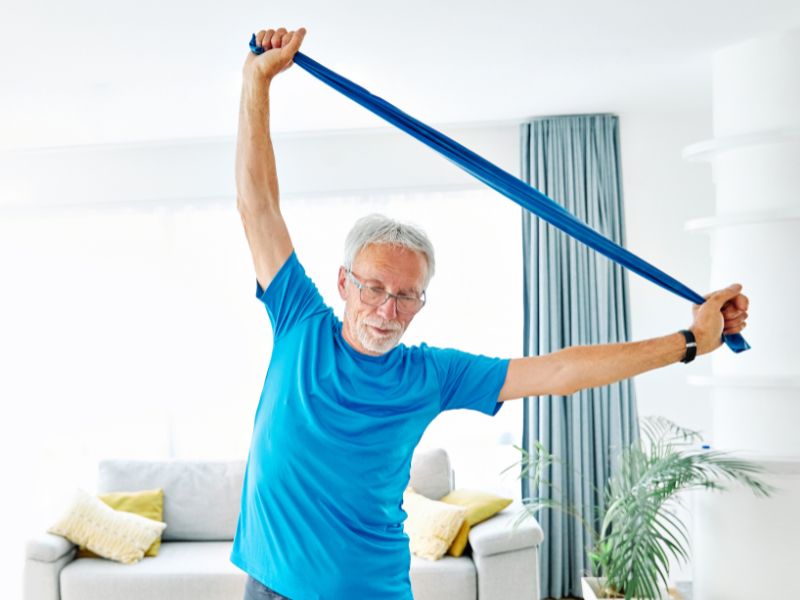
Bodyweight exercises like squats, lunges, pushups, and glute bridges can be done anywhere and build real functional strength. If you want to add resistance without a full gym setup, a set of resistance bands or a pair of dumbbells covers most of what you need.
If you’re just starting out, aim for two days a week of resistance training targeting your major muscle groups: legs, back, chest, and core. Even that modest commitment, done consistently, produces measurable benefits in strength, balance, and metabolic health over time.
What About Cardio?
Still important. Zone 2 cardio — the kind where you can hold a conversation but you’re working — is excellent for heart health and endurance, and the research on combining it with strength training shows the best outcomes overall. This isn’t a case of one or the other.
But if you’re only doing cardio and skipping strength work, you’re leaving a lot on the table. The goal is to be strong and have endurance, because that combination is what actually keeps people active, independent, and healthy well into their later decades.
A Good Reason to Talk to Your Doctor
If it’s been a while since you’ve done any strength training, or if you have joint or mobility concerns, it’s worth a conversation with your provider before you start. They can help you figure out what modifications make sense for your situation and make sure you’re building up in a way that’s sustainable. The best exercise program is one you can stick with — and starting smart makes that a lot more likely.
As with any new workout routine, mild soreness is normal. But if you experience more intense pain, swelling, decreased range of motion, or other symptoms of a minor injury after strength training, visit Urgent Care of Fairhope. We’re equipped to diagnose and treat minor injuries quickly so you can get back to your routine. Check our waitlist online to see our current wait times.
Search our Blog
Recent Posts
8 Ways to Reduce Bloat
Bloating has a way of showing up uninvited, usually right when you’re trying to feel your best. One minute you’re fine, the next your stomach feels tight, heavy, or just…off. The good news? Most everyday [...]
2026 Summer Camp Guide: Eastern Shore, Alabama
School’s out for summer! While the kids are rejoicing, we know many parents are picturing long days of screen time, junk food and boredom. If you haven’t scheduled a summer camp experience for your student [...]
The One Exercise More Adults Should Be Doing For Healthy Aging
For decades, the advice was pretty consistent: want to stay healthy as you get older? Get your cardio in. Walk, bike, swim, keep that heart rate up. But research over the last several years has [...]
What To Do When Your Kid Gets Sick on Vacation
You packed the sunscreen. You remembered the swimsuits. You even brought the backup snacks. And then your child wakes up with a fever. If you travel with kids, you already know: illness does not care [...]
Understanding Bloodwork: What It Tells You and Why It Matters
You’ve probably heard it before: “We’ll order some labs.” But what are they actually looking for? And how do they decide which tests you need? Bloodwork isn’t random. Each panel is designed to answer a [...]
Everything You Need to Know About the 2026 Fairhope Arts & Crafts Festival
In Fairhope, it doesn’t really feel like spring until we’re counting down the days to our favorite annual springtime event: the Fairhope Arts and Crafts Festival. Now in its 74th year, this downtown celebration is [...]